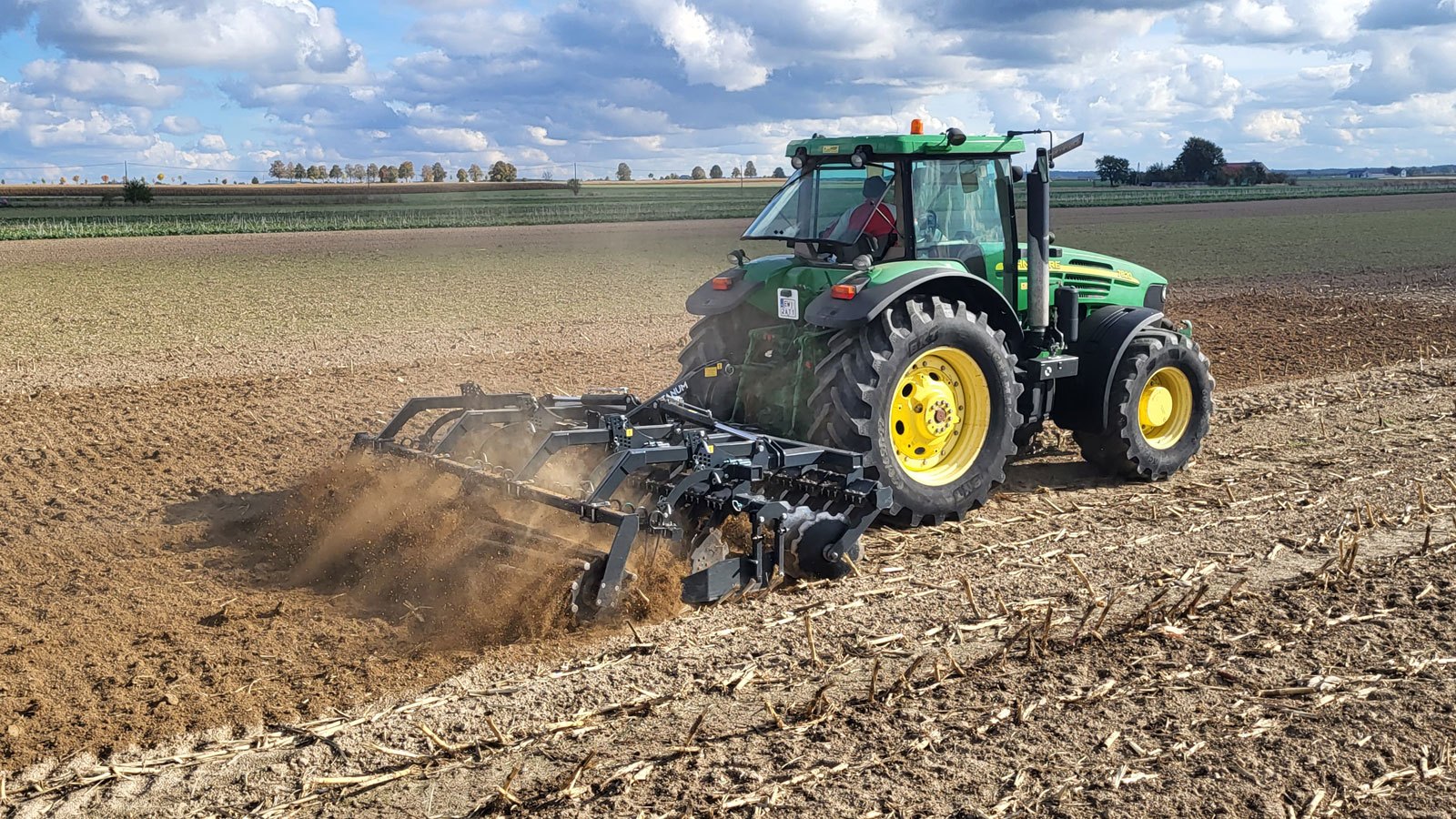
Winter rapeseed is a plant that has become firmly established in the crop rotations of Polish farmers. Proper soil preparation is the foundation for successful rapeseed cultivation. Soil structure and condition have a direct impact on emergence, root system development, winter hardiness and future yields. In this step-by-step guide, we will show you what to look for before sowing – from soil analysis, through cultivation, to initial fertilisation. With proper site preparation, you will increase your chances of a healthy and productive crop that is resistant to stress and disease. Find out how to prepare your field so that your rapeseed gets the best possible start.
Agrotechnical treatments before sowing rapeseed
 After harvesting the previous crop and before sowing rapeseed, several key agrotechnical treatments should be carried out.
Firstly – shallow stubble cultivation.
If the previous crop was grain, the first and most important step should be shallow stubble cultivation, which will stimulate self-seeding and weed seedlings to germinate. Shallow cultivation should be carried out at least twice. In this way, we are able to significantly reduce weed infestation. What machines should be used for shallow cultivation? We invite you to read our previous article entitled: ‘Shallow but effective – stubble cultivation and sowing of catch crops’.
Secondly – subsoiling
Rapeseed has a very well-developed taproot system. This allows it to absorb nutrients from deeper parts of the soil profile. In order to enable it to ‘search’ for deeper nutrients, we need to create the right conditions for it. The best choice for this treatment is the TYTAN PLOW PLUS subsoiler. This subsoiler, equipped with hydraulic protection for the tines, is used to break up the ‘plough pan’ and loosen the soil. You can find more advantages and principles of subsoiling in our article entitled:„Subsoiling”
Thirdly – pre-sowing cultivation
Assuming that we are sowing rapeseed using a no-till cultivation system, the last step before sowing should be deep tillage and mixing the soil before sowing. The KRYPTON PLUS no-till cultivator is very well suited for this purpose. However, it is important to remember to carry out this agrotechnical treatment some time after subsoiling to give the soil time to rest after subsoiling.
When and how to fertilize rapeseed?
 Winter rapeseed has high soil and nutritional requirements. On average, it is assumed that rapeseed needs 50-60 kg of nitrogen, 25-30 kg of phosphorus, 60-70 kg of potassium, and a significant amount of micronutrients, including boron, copper, manganese, zinc, and molybdenum, to produce 1 ton of grain with the appropriate amount of straw. In addition, rapeseed is very sensitive to soil pH. Therefore, the pH should be regulated, i.e., it should be around 6-7.
NPK fertilizers for rapeseed should be applied deep into the soil profile. In the case of plowed cultivation, we apply fertilizer directly before plowing, and in the case of no-till cultivation, before the no-till cultivator. It is common practice to use liquid natural fertilizers, i.e., slurry or digestate. Such fertilizers should also be applied deeper. A TSG disc harrow-based soil applicator or a soil applicator equipped with GUNIN spring tines are ideal for applying slurry. Both of these machines, placed behind a tanker, apply liquid fertilizer directly to the soil while mixing it, which significantly reduces the loss of volatile nutrients. Slurry applied in this way creates excellent conditions for the development of winter rapeseed, as it is a fertilizer very rich in easily accessible nutrients.
By following the above recommendations, we can be sure that winter rapeseed sown at the right time will have good conditions for growth and an adequate amount of nutrients in the early stages of development.